 Skip to content


Key Takeaways
- Apathetic patterns, such as lack of motivation, emotional numbness, and indifference, often develop gradually and can quietly erode career growth and close relationships.
- Apathy usually points to something underneath it, such as burnout, depression, chronic stress, or a life that no longer matches your values.
- Early warning signs include detachment from work, disinterest in hobbies, and unresponsiveness toward the people you care about.
- Small, consistent actions, combined with professional support when needed, can help you rebuild energy, purpose, and connection.
You used to care about your work. You used to look forward to dinner with your partner or a weekend with friends. Now, most days feel flat. Tasks pile up, messages go unanswered, and very little seems worth the effort.
If this sounds familiar, you may be caught in an apathetic pattern. Apathy rarely announces itself. It shows up as small moments of indifference that add up over months, until your career stalls and your relationships feel distant.
Apathy can lift. Once you understand what is driving it, you can take practical steps to feel engaged again and get professional support if you need it.
What Is Apathetic Behavior and Why It Matters
Apathetic behavior is a persistent loss of interest, emotion, or motivation toward things that once mattered to you. A 2021 review in Clinical Psychopharmacology and Neuroscience defines apathy as a measurable drop in goal-directed activity compared with a person’s previous level of functioning. The same review describes apathy as distinct from depression, although it can occur alongside it.
Everyone feels unmotivated now and then. Apathy becomes a concern when it lasts for weeks, spreads across several areas of life, and starts to affect your work, health, or relationships.
How Lack of Motivation Manifests in Daily Life
Lack of motivation rarely looks dramatic. More often, it shows up in small, everyday choices:
- Putting off tasks you used to handle easily
- Saying “I don’t care” or “whatever” more often
- Skipping plans, workouts, or hobbies without a clear reason
- Feeling little satisfaction after finishing something
- Spending free time scrolling or zoning out instead of resting or connecting
Over time, these habits can start to feel like part of your personality. Treat them as signals worth paying attention to, because that is the first step toward change.
The Hidden Cost of Emotional Numbness on Professional Success
Emotional numbness can quietly stall a career. When you feel flat inside, it becomes harder to take initiative, share ideas, or push for growth opportunities. Colleagues and managers may read that numbness as a lack of commitment, even while you are struggling to keep up.
Recognizing Indifference Before It Becomes a Pattern
Indifference at work often starts small. You might stop speaking up in meetings, do the minimum on projects, or feel relieved when a challenging assignment goes to someone else. Watch for these early signs:
- You no longer care about feedback, good or bad
- Career goals you once had now feel pointless
- A big win feels the same as an ordinary day
- Sunday evenings bring dread, or nothing at all
Catching indifference early gives you more options. Once it hardens into a habit, it can shape your performance reviews, promotions, and professional reputation.
The Ripple Effect of Detachment in the Workplace
Detachment rarely stays contained. When you pull back, teammates may pick up the slack, communication breaks down, and trust can erode.
The World Health Organization describes burnout as a syndrome caused by chronic workplace stress that has not been successfully managed. Its three dimensions are exhaustion, growing mental distance or cynicism toward your job, and reduced professional effectiveness. If detachment at work comes with exhaustion and slipping performance, unmanaged stress may be the cause, and changes to your workload or environment may matter as much as changes to your mindset.
Disinterest as a Signal Your Life Needs Realignment
Disinterest can carry useful information. When a job, routine, or goal no longer holds your attention, it may no longer reflect who you are or what you value.
Ask yourself a few honest questions:
- Did this feel meaningful at one point, and what changed?
- Am I chasing goals I chose, or goals others expect of me?
- Is my disinterest everywhere, or only in certain areas of my life?
If your disinterest is limited to one area, it may point to a needed change in role, environment, or direction. If it shows up almost everywhere, it may be tied to burnout, depression, or another mental health concern that deserves professional attention.
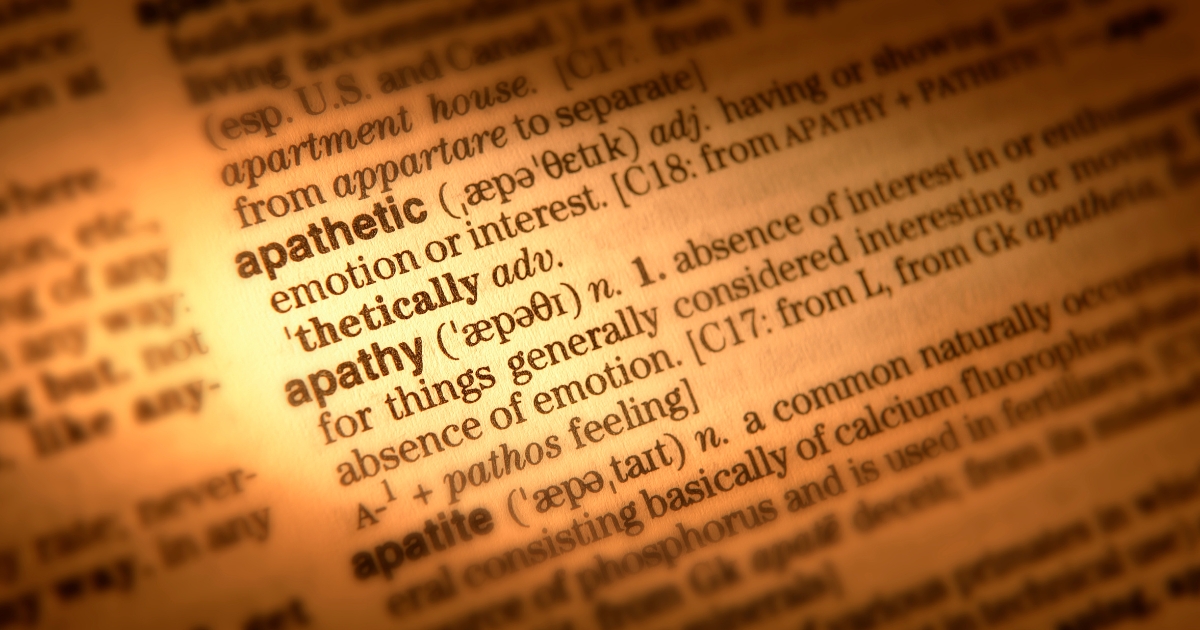
Breaking Free From Listlessness and Passive Attitudes
Listlessness creates a frustrating loop. You feel too drained to act, and not acting leaves you feeling even more drained. A passive attitude can feel safer in the short term, but over time it shrinks your world. Small, repeatable actions usually work better than a single burst of willpower.
Practical Steps to Reignite Your Drive
- Start smaller than feels necessary. Commit to five minutes on a task instead of an hour. Momentum tends to follow action.
- Move your body. A 2023 review of reviews in AJPM Focus found that people with higher physical activity levels had a lower risk of depression and anxiety than people with low activity levels. A short daily walk is a realistic starting point.
- Protect your sleep. Going to bed and waking up at consistent times helps steady your energy and mood.
- Reconnect with one value. Pick something that once mattered to you, such as learning, creativity, or helping others, and take one small step toward it this week.
- Track small wins. Writing down what you completed each day helps counter the feeling that nothing is changing.
- Reach out for support. A licensed therapist can help you uncover what is driving your apathy and build a plan that fits your life.
Unresponsiveness in Relationships: When Apathy Damages Connection
Apathy can do serious damage to relationships, often without a single argument. Unresponsiveness looks like half-listening, delayed replies, forgotten plans, or a flat reaction to a partner’s good news. To the people who love you, it can feel like rejection.
Meanwhile, you may feel guilty yet unable to find the energy to show up differently. That gap between what you want to feel and what you actually feel can deepen isolation on both sides.
A few steps can help protect your connections while you work through apathy:
- Tell trusted people you are going through a low-energy period, so they do not fill in the blanks with hurtful assumptions.
- Keep small rituals, such as a short daily check-in, a shared meal, or a weekly call, when bigger gestures feel impossible.
- Respond, even briefly. A quick “I saw this and thought of you” beats silence.
- Consider family therapy, where a neutral professional can help everyone understand what is happening and rebuild closeness.
Reclaiming Your Energy and Purpose at Northern California Mental Health
You do not have to wait until apathy costs you a job or a relationship to ask for help. At Northern California Mental Health in Sacramento, our licensed therapists and psychiatrists help adults understand what sits behind emotional numbness, lack of motivation, and detachment.
Your personalized plan may include evidence-based therapies such as cognitive behavioral therapy (CBT), dialectical behavior therapy (DBT), and acceptance and commitment therapy (ACT), delivered through individual, group, or family therapy. We offer residential treatment, an intensive outpatient program, outpatient care, and virtual mental health treatment, so your support can match your needs and schedule.
If depression, anxiety, or trauma has left your life feeling flat, contact Northern California Mental Health to request a free, confidential assessment and take the first step toward feeling like yourself again.

FAQs
-
How does emotional numbness differ from clinical depression or temporary sadness?
Temporary sadness is a normal reaction to a specific event, and it usually fades on its own. Emotional numbness is an absence of feeling rather than a painful emotion. Clinical depression involves several symptoms, such as low mood, loss of interest, fatigue, and sleep changes, that last most of the day, nearly every day, for at least two weeks. Numbness can be part of depression, but it can also appear without it.
-
Can chronic indifference at work signal burnout rather than laziness or lack of motivation?
Yes. Burnout develops from chronic workplace stress that has not been managed well, and it often affects people who once cared deeply about their work. Exhaustion, cynicism about your job, and slipping effectiveness together point more toward burnout than toward a character flaw. A clinician can help you tell burnout apart from depression, since the two can overlap.
-
Why does apathetic behavior often worsen relationship satisfaction without obvious conflict?
Relationships depend on responsiveness. When one partner becomes apathetic, the other may feel unseen or unimportant, even if no one argues. Over time, that quiet distance can hurt as much as open conflict.
-
What physical health problems correlate with prolonged listlessness and passive attitudes?
Prolonged listlessness often leads to less movement, poorer sleep, and irregular eating, which can contribute to fatigue and weight changes. When listlessness is part of depression, people may also notice aches, headaches, or digestive problems without a clear physical cause. The National Institute of Mental Health also notes that depression can co-occur with chronic illnesses such as diabetes and heart disease, and each can make the other worse.
-
How quickly can detachment from hobbies indicate a need for professional mental health support?
There is no fixed deadline. If your loss of interest in hobbies persists most days and starts to affect your work, relationships, or daily routine, it is a good time to talk with a mental health professional. Seek help right away if you have thoughts of self-harm or suicide. In the U.S., you can call or text 988 to reach the 988 Suicide & Crisis Lifeline.
References
- Fahed, M., & Steffens, D. C. (2021). Apathy: Neurobiology, assessment and treatment. Clinical Psychopharmacology and Neuroscience, 19(2), 181–189. https://pmc.ncbi.nlm.nih.gov/articles/PMC8077060/
- World Health Organization. (2019, May 28). Burn-out an “occupational phenomenon”: International Classification of Diseases. https://www.who.int/news/item/28-05-2019-burn-out-an-occupational-phenomenon-international-classification-of-diseases
- National Institute of Mental Health. (2024). Depression (NIH Publication No. 24-MH-8079). https://www.nimh.nih.gov/health/publications/depression
- Wanjau, M. N., Möller, H., Haigh, F., Milat, A., Hayek, R., Lucas, P., & Veerman, J. L. (2023). Physical activity and depression and anxiety disorders: A systematic review of reviews and assessment of causality. AJPM Focus. https://pmc.ncbi.nlm.nih.gov/articles/PMC10546525/


